Showing posts with label Documentary. Show all posts

Sunday, July 26, 2020

Haxan

Image credit: mastercontol -Tumblr
I must apologise to any of my readers who have actually been following my quest to review all ‘1001 films you must see before you die’ (very outdated now). My resolve to complete this quest has been erratic and flimsy –to be kind- and I have not reviewed a canonical classic in donkey’s years!
But today I got back in the saddle.
A lull in a rainy afternoon inspired me to do a quick Youtube search for an early 1920s film that was not over 3-hours long and unearthed a disturbing gem in cinematic history: Haxan.

This ‘documentary’ is from Danish filmmaker Benjamin Christensen and is an exploration into the belief in the devil and witchcraft during Medieval times and the Renaissance.

If my lectures in uni were this engaging and unforgettable, I surely would have gotten all HDs! Christensen’s film is a glorious (and often terrifying) piece of cinema that defies genre as it’s part academic exploration into an earlier time –the early scenes do remind one of being in a university lecture theatre- and part horror movie.

The film is a montage of stills, models, pictures, and dramatic reenactments, which come with their own breathtaking photographical tricks and visual delights. Indeed it’s a piece that really explores all possible avenues of theatre and the artistic industry – it’s a celebration really- that still manages to disturb and awe a modern audience. Amidst the pointer outlining various characters in a medieval painting, the film boasts a mechanical set, photographic layering to depict spectres, and impressive achievement in makeup and costume design during the more dramatic parts that are reenactments of the Sabbath and a medieval witch trial.
Christensen’s attention to detail and the power of mise-en-scene is spectacular and can undoubtedly be held as the inspiration for many a modern horror movie including The Exorcist or anything by Tobe Hooper.

Johns Hopkins Unversity
But my review of Haxan is not all praise. While it still manages to engage a modern audience, there are definite cracks and marks of out-datedness, especially during he film's exploration into the modern day, in particular, mental health and its relations to medieval witchcraft. 2020 viewers, coming from a world where there is more awareness of mental illness than ever, might find some of the filmmaker's opinions on the subject disturbing or offensive. But we must remember that this movie reflects a different time and social attitude, so this flame can't be held against it for too long. 
Whilst its stubborn lack of genre makes it initially hard to warm to, perseverance is rewarded and Haxan sits within cinematic history as a true piece of experimental masterwork.

Director: Benjamin Christensen, 1922

Cast: Elisabeth Christensen, Astrid Holm, Karen Winther, Maren Pedersen, Ella La Cour, Emmy Schonfeld, Kate Fabian, Oscar Stribolt, Clara Pontoppidan, Else Vermehren, Alice O’Fredericks, Johannes Andersen, Elith Plo, Aage Hertel & Ib Schonberg

Tuesday, May 7, 2019

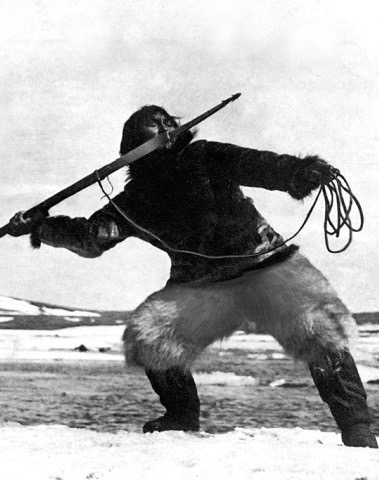
Nanook of the North

Image credit: Wikipedia
There are multiple points of debate and controversy within cinema, but one that definitely takes the cake has been the genre of the documentary, and by extension, the subgenre of the biopic. At this moment in time, the debates surrounding the genre and subgenre are louder than ever, as the cinema is currently being flooded with entertaining, yet arguably strongly fictionalised biopics: Bohemian Rhapsody, Rocket Man, and Tolkien.

The birth of the documentary and the idea of true stories being immortalised on screen truly began with the birth of cinema and the Lumiere brother’s footage of a train. However, canonically the title of the ‘father of the documentary’ and therefore, instigator of the whole reality vs. cinema doco-debate has been bestowed on Robert J. Flaherty and his stunning documentary feature, Nanook of the North.

The film follows a celebrated Inuit hunter, Nanook (the Bear), and his family as they travel across the stark and brutal Arctic landscapes in an ongoing search for food. Delightfully, the film chronicles their day-to-day activities, which range from the mundane (igloo building), to the funny (Nyla, Nanook’s wife, chewing his boots to soften them), to the dangerous (walrus hunting).

A series of simple and sequential vignettes that detail the life of Nanook and his family over the course of a few weeks, much of the film’s significance within cinematic history comes from its ability to divide its audiences in a great debate that has transcended generations, as well as its gorgeous blend of reality and art. Many contemporary audiences are critical of the movie because a large portion of it does seem to be staged cinema, as well as the knowledge that Flaherty –after losing all his original footage in 1916- based much of the film on what he could remember originally shooting, which resulted in crafted, rather than natural, scenes of Nanook doing activities he commonly did, some he hadn’t done in a while, and some that he never did at all.

Image credit: Entertainment
However, defenders of the film commend it on its brutally truthful depiction of a very harsh and unforgiving environment as well as an inspiring story of enduring human determination, resourcefulness, and strength. Indeed the final scene, which depicts Nanook and his family taking shelter from an insane snowstorm, is one of the most chilling (pardon the pun) moments in movie history. Sadly, this scene gained more potency after the film’s release when it was revealed that Nanook and his family had perished in a storm not long after completing the film.

Regardless of its divided audience as to whether everything in it is fact or fiction, Nanook of the North still stands as a touching and rather breathtaking film, both in its content and as an art form.

Director: Robert J. Flaherty

Cast: Nanook, Nyla, Cunayou, Allee,  and Allegoo

Friday, October 23, 2015

Room 237 [PG]


What if someone told you that The Shining was about ‘the great terror’ of the massacres of the Native American Indians? What if another person told you it was all about the Holocaust? Or how about that it’s a secret confession from Kubrick about how he worked on the faking of the Apollo moon landing? Many Kubrick fans and aficionados have theories like these (and some even more far-fetched) about Kubrick’s classic horror movie and Room 237 endeavours to explore these theories in depth, pulling apart the movie and finding its ‘hidden secrets’. 

I’ve always said, at the end of the day, that a film is what you make of it. As far as I’m concerned there is no real right or wrong way to perceive a movie or what a certain shot means and if we can pick out details that support our theories, hey that’s clever cinema-viewing and go us. 

Rodney Ascher’s documentary is not a mere how-Kubrick-made or a dummies’ how-to-interpret guide to The Shining, it’s actually a really stunningly and cleverly put together feature that explores Kubrick’s fans. Simultaneously, it’s a film that explores contemporary relationships with images in the digital age: where we can revisit movies on DVD, rewind, pause, zoom in, etc, as well as the idea that, once we hear a theory, we can work backwards and find the clues to support it. It’s a film that looks at twisting things to make new meanings out of them and to be honest; it’s scarier than Kubrick’s original classic! 
The brilliance of this film struck me right from the opening shot, which is actually a scene from Eyes Wide Shut with posters and articles of The Shining deposited into the image. This entire film is one giant movie collage, with scenes from various Kubrick films, as well as other notable ones, being used to actually chronicle the story. The central content of the movie is entirely through voice-over narration (complete with interviewee’s kids screaming in the background) and no interviewer or interviewee is ever actually shown. It’s literally all scenes from movies depicting events that the interviewees are describing: their own experiences of watching The Shining
Intermingled with these are snippets of archival and historical footage to bring the seriousness and depth to the film: black and white footage of marches in Nazi Germany, the moon landing footage etc. The editing is so streamlined and seamless it’s a wonder to behold and, add to that, a montage of eerie instrumental tracks as an accompanying soundtrack (including, of course, the theme of The Shining) and you find yourself completely entranced by the whole thing! 
Some of the theories to get pretty far-fetched like Kubrick’s fascination with subliminal messages and his putting a picture of his own face in the clouds of the opening shots as his name rolls up the screen, whilst others just leave you wondering how bored these people must be to be bothered to map out the entire Overlook to determine whether the window in Ullman’s office should exist or not. But this is the fun of the film too: hearing all these theories and ideas do make you want to go back over the film again and see if you can pick out the subliminal messages and the other little details you missed. 
Featuring contributions from Bill Blakemore, Geoffrey Cocks, Juli Kearns, John Fell Ryan, Jay Weidner, and featuring Stephen Brophy, Ash Brophy, Buddy Black, Buffy Visick, and Sam Walton as ‘cast’, Room 237 is a stunning documentary film; both visually and in its content. As a film, it’s an incredible illustration of the digital age and what it means for images (nothing is sacred nor safe really) and as a documentary, it’s really interesting to hear all these theories and ideas from people who have spend so much time obsessing over them and thinking about them. It’s a slightly disturbing, but wholly stunning film really. 

Thursday, August 7, 2014

The Adventures of Errol Flynn [PG]


From humble beginnings as a boy searching for adventure to an instant superstar on the Hollywood screen, Errol Flynn charmed his way through movies, love, and life. Whilst the sailing was not always smooth, the journey from his first screen performance at the ripe age of 20 through to his death at the age of 50 was a series of one adventure after another and his legend lives on in the stream of swashbuckling, romantic, exciting, and dramatic movies that make up the repertoire of Australia’s own Tasmanian Devil. 

He’s one of the biggest names when it comes to Australian talent: Heath Ledger, Hugh Jackman, even Hugo Weaving cannot be put into the same sphere as Errol Flynn. Devilishly handsome, charming, and talented, he was a chameleon on the screen; blending into any costume he was put into whether it be swashbuckling pirate, a soldier at war, or a cowboy. He’s one of the original classics in our cabinet of talent and, until tonight, I had no idea just how great the story was his life was. The Adventures of Errol Flynn chronicles everything from his humble beginning in Hobart Tasmania, through to his island life, his first screen performance, his overnight stardom with Captain Blood, his string of movie successes, the infamous rape charge, and his eventual death from a heart attack at the age of 50. 

From humble beginnings as a boy searching for adventure to an instant superstar on the Hollywood screen, Errol Flynn charmed his way through movies, love, and life. Whilst the sailing was not always smooth, the journey from his first screen performance at the ripe age of 20 through to his death at the age of 50 was a series of one adventure after another and his legend lives on in the stream of swashbuckling, romantic, exciting, and dramatic movies that make up the repertoire of Australia’s own Tasmanian Devil. 

The Errol Flynn story is one that’s really captivating and incredible because it really is a rags-to-riches story like the ones in movies! Underneath the moustache, the wavy locks, and the winsome charm was a boy who just longed for adventure and, narrated by Ian Holm with frequent voice-over bouts from Flynn himself, it’s a tale I could hear again and again. 
Told in a linear fashion, the documentary is a fascinating montage of never-before-seen footage, clips from movies, and interviews with various people close to the man himself. It’s accessible, it’s engaging, and what’s really great is that it’s genuine. What I mean by that is that it’s not an academic critique of Flynn or his work, but anecdotes about a man. Some of the best stories come out of Olivia de Havilland, seriously watch out for those! 
Featuring interviews with Rudy Behlmer, Jack Cardiff, Delmer Daves, Oliva de Havilland, Richard Dreyfuss, Nora Eddington, Deirdre Glynn, Patrice Wymore Flynn, Greer Garson, David Niven, Paul Picerni, Basil Rathbone, Richard Schickel, Vincent Sherman, Hal B. Wallis, Joanne Woodward, and Burt Reynolds, The Adventures of Errol Flynn is a fascinating documentary that tells the incredible life story of a true Aussie gem. 

Sunday, March 2, 2014

Classic Albums: The Who, Who's Next [M]


Credited by many fans and musicians as being the greatest testament to the song writing ability of Pete Townshend and the musical prowess and power of The Who, Who’s Next reached number one in the UK charts after its release in 1971 and still stands as the band’s most pivotal album. Beginning as a concept for a multimedia event to follow up Townshend’s ‘rock opera’ Tommy, Who’s Next came to fruition when the remainder of the band as well as everyone else could not grasp what Townshend was trying to say. 

I have to admit that I wouldn’t call myself a Who fan. I really like some of the songs they’ve had and I appreciate why their names are famous within the realms of rock ‘n roll, but I just can’t bring myself to really love them. I’m sure this now begs the question ‘why do we have this DVD in our collection?’ and the answer is that it was a present to my brother, again not really a Who fan. And as it’s in the collection, it stands that I have to review it so here we go… 

Credited by many fans and musicians as being the greatest testament to the song writing ability of Pete Townshend and the musical prowess and power of The Who, Who’s Next reached number one in the UK charts after its release in 1971 and still stands as the band’s most pivotal album. Beginning as a concept for a multimedia event to follow up Townshend’s ‘rock opera’ Tommy, Who’s Next came to fruition when the remainder of the band as well as everyone else could not grasp what Townshend was trying to say. 

I will admit that this is quite an interesting feature, maybe even more especially for viewers who aren’t fans, because it really articulates why this band was so adored and where its ingenuity stems from. For a start, I didn’t realise that it was Pete Townshend that was the real musician and songwriter. His talent really knows no bounds: windmill impersonation was just a novelty in his repertoire. After Tommy, which does receive some explanatory attention in this feature making it a little easier to grasp and appreciate, Townshend had in mind a follow up multimedia event that was to include a live concert, a movie, and a soundtrack. However, the concept of the event proved to be a little too obscure for fans and even the band to concretely grasp and so the project was reshaped with the powerful anthems of ‘We Won’t Get Fooled Again’, ‘Teenage Wasteland’, and ‘Behind Blue Eyes’ appearing on the album where they were better suited, as they could tell their own stories and spread the concepts of utopia and dystopia by their own notes. When you hear Peter, Roger, and John talk about these songs in their original context, it really makes you listen to them differently and maybe even glean more meaning out of them. 
As well as recent interviews, the feature also contains vintage, unseen footage of live performances of some of these classic tracks. 
For the Who fans out there, this’d be a great little feature that you should have in your collection and for the occasional listeners like me, it’s a fascinating feature that gives you a little more insight into what made/makes this celebrated band so celebrated. 

Sunday, February 23, 2014

Classic Albums: Queen, A Night At the Opera [M]


One of the most celebrated albums of their career, Queen’s A Night At the Opera continues to bring much joy and wonderment into the homes of many music lovers, both vintage and modern. This ‘Classic Albums’ 2-disc edition celebrates the album’s 30th anniversary and answers questions that many music lovers have wanted to know including how the album got its name, what ‘‘39’ was really about, and how that operatic section of ‘Bohemian Rhapsody’ was achieved. 

In case I haven’t mentioned it or you haven’t pieced it together, I ABSOLUTELY ADORE QUEEN. They are without a doubt my favourite band and I’ve been listening to them from a very young age. Freddie’s voice, Brian’s guitar, Roger’s drumming, and John’s bass make up the soundtrack to my childhood and I would not be the person I am today without them. I find it particularly wonderful that many modern music listeners are fans of Queen as well. Back in their day, Queen were seen as an acquired taste, being artistic and experimental: this album being a testament to that, and they were famously booed off the stage when they supported Aerosmith. But over time, the brilliance of this band has come to be universally acknowledged and celebrated and I think it’s a really beautiful thing to see teenagers and youths sing along whenever some of the classic tracks come on. May the universe bless this day and age for people who would rather listen to the music from 30-50 years ago than what’s on the radio! 

One of the most celebrated albums of their career, Queen’s A Night At the Opera continues to bring much joy and wonderment into the homes of many music lovers, both vintage and modern. This ‘Classic Albums’ 2-disc edition celebrates the album’s 30th anniversary and answers questions that many music lovers have wanted to know including how the album got its name, what ‘‘39’ was really about, and how that operatic section of ‘Bohemian Rhapsody’ was achieved. 

Disc one of this show consists of a multitude of artists, colleagues, presenters, engineers, and journalists providing commentary on each track of the album; telling us all little anecdotes, opinions, explanations, and history of each song. It’s here that I discovered that ‘’39’, a folk sounding song written by Brian May, is actually about volunteers leaving Earth and travelling through space to find new worlds. It’s when you discover stuff that like that you listen to the song with a whole new ear and I personally think it’s really fascinating to see how suddenly the whole way in which you listen to a song can be altered. I’m also fascinated by the fact that I never even pieced that song together; I just listened to the descriptive lyrics and thought they were nice. Oops. 
On the first disc, it’s important too to watch the special features as they harbour further description, history, explanation, and anecdotes from Brian May and Roger Taylor. Case in point, the story about how the album got its name, which is a freaking cool story it has to be said. 
Filled with interviews, vintage footage, accolades, anecdotes, history, and explanations, Classic Albums: Queen, A Night At the Opera is a great little doco that both fans and music enthusiasts will love. 

Wednesday, February 19, 2014

Aerosmith: You Gotta Move [M]


Over the last three decades Aerosmith have been established as America’s Greatest Rock Band. Whilst touring in support of their critically acclaimed album, ‘Honkin’ on Bobo’, they put on an incredible live show that was filmed for a feature that aired on A&E. That program has since been expanded and made into Aerosmith’s first ever live concert DVD. 

I ABSOLUTELY ADORE AEROSMITH! I grew up listening to them because my parents are both admirers and true rockers, as I’m sure is the case for many teens and first-decade adults. To me, Aerosmith were and still are the ultimate rockers. I read Steven Tyler’s autobiography Does the Noise in My Head Bother You? and seriously it’s the most rock and roll piece of literature that I’ve come across. You just have to watch this show and see how the fans react as testament to what the band does, stands for, and means to people. You watch live shows and you sing along with the songs, admire/gawk/cringe at the fashions of your idols, but I’ve never seen a live show like this one. Quite seriously, I was not only singing along with the songs, I was dancing, I was reaching for Steven’s hand to take in mine and kiss, I was almost crying with love, devotion, and fandom. I’ve never seen a concert that’s made me react this way. This show is something else. 

Over the last three decades, Aerosmith have been established as America’s Greatest Rock Band. Whilst touring in support of their critically acclaimed album, ‘Honkin’ on Bobo’, they put on an incredible live show that was filmed for a feature that aired on A&E. That program has since been expanded and made into Aerosmith’s first ever live concert DVD. 

I should at this point specify that this is not just a recorded live concert. What this feature is is a balanced blend of on-the-bus footage, in-the-studio footage, especially recorded interviews with the band and their co-workers, as well as the live numbers. We get to hear Steven, Joe, Brad, Tom, and Joey talk about their chemistry, their experience, practically everything, and what I really love is how down-to-earth and comfortable the interviews feel. You know how some interviews can just feel structured and constricted, these ones don’t. The band members answer all questions with the greatest of casualness it’s really cool. 
Another thrill for me watching this show is getting the shots of the audience. In a theatre where the audience crowd the stage and can actually stroke Steven and Joe (oh man I am so jealous of some of the people in this crowd), this incredible exhibition of rock and roll and band worship is displayed. There isn’t just quick cut-to-crowd footage of people singing along and screaming, these people are dancing, they are singing along with every word, they are interacting with the camera; they are part of this show. And it’s not just a singular generation that makes up the crowd: we’ve got parents, teenagers, first-decade adults, tweens, and even kids asleep on their parents’ shoulders! The band talks about giving to their fans and their fans giving it right back and when you look at the multigenerational crowd of screaming and singing fans that are at this show, the irrepressible and immaculate power of Aerosmith cannot be denied! 
Featuring live performances of such classic Aerosmith hits as ‘Toys in the Attic’, ‘Love in an Elevator’, ‘Cryin’, ‘Back in the Saddle’, ‘Dream On’, ‘I Don’t Wanna Miss a Thing’, ‘Sweet Emotion’, and Walk This Way’, Aerosmith: You Gotta Move is a fantastic music DVD! I seriously cannot put into words how moved and amazed I was by this feature. It had an effect on me that I’ve never had with a music DVD. 

Sunday, February 9, 2014

Lost & Running [PG]


Good mates, six months, and an endless highway leading to adventure: Lost & Running chronicles the cross-country road trip and surfside adventures of a group of good Aussie friends. 

Don’t ask me why we have this in our library because, for the life of me, I have not got a clue. It’s actually my brother’s DVD, which I don’t think he’s even watched yet, that he somehow got his hands on (for free I think) when he was going through his beach bum, surfing phase… Whatever the reason it’s in our collection therefore I had to watch and review it. 

Good mates, six months, and an endless highway leading to adventure: Lost & Running chronicles the cross-country road trip and surfside adventures of a group of good Aussie friends. 

Ok, basically this is really just a half-hour feature of surfing footage with a few face-to-camera chats and roadside and in-car filming. It doesn’t sound like much and when you think about it critically, it really isn’t much, but this feature (I can’t call it a film) does offer its audience something. 
Being a doco, the in-the mix, on-the-spot method of filming, particularly scenes in the van, create this good sense of mateship and reality. In this day and age where people are documenting practically everything via their smartphones, this doco holds a fair bit of relevance and as such the intended audience will probably get a good kick out of it and be able to really identify with it. The other thing that I rather liked about this feature was its coverage of Australia. 
Not all footage comes from the beaches, though the majority of the screen is dominated by sapphire blue waves that both marvel and terrify, there is also telling coverage the rural country: the deserts, the country towns, the bushland, and the rabbit proof fences. On top of this we’ve got beautiful shots of some of Australia’s captivating wildlife including kangaroos, seals, dolphins, and even whales and it’s these little snippets of film that sends ripples of patriotism and love of country through you. 
Filmed, written, and directed by Nigel Davenport and featuring surfing from Paul Morgan, Brett Burcher and Justen ‘Jughead’ Allport, Lost & Running is a quick and captivating little doco that offers more to its audience than it appears to. Filled with beautiful shots of Aussie landscape and seascape, wildlife, dramas, and mateship, you can’t really call it a ‘film’ but it was a feature that I didn’t mind. 

Monday, January 20, 2014

The Life of Frank Sinatra [E]


Not actual cover art

From humble beginnings to becoming ‘the Voice’, Frank Sinatra’s life and career is something to be marvelled at. Before Elvis was causing crazy girl riots, there was ‘Ol Blue Eyes who charmed his legions of Bobby Soxers time and time again. Suffering the trials and tribulations of 2 marriages, mass slamming from the columnists, and deep slumps in his career; Sinatra’s resilience continues to make for a celebrity story that sparks admiration and respect.  

So it would seem that I’m on a bit of a Frank Sinatra bender tonight: this little doco came in my Sinatra triple pack and I figured why not give it a try. I’m not usually a fan of docos, I really have to love the subject or person they’re about, but I do have to admit that this is the first doco that I’ve seen that is actually quite dated. For me, docos have always been an acquired taste, but until tonight I never really considered that there could be good and bad docos like there are in movies. Look at that, you learn something new every day. 

From humble beginnings to becoming ‘the Voice’, Frank Sinatra’s life and career is something to be marvelled at. Before Elvis was causing crazy girl riots, there was ‘Ol Blue Eyes who charmed his legions of Bobby Soxers time and time again. Suffering the trials and tribulations of 2 marriages, mass slamming from the columnists, and deep slumps in his career; Sinatra’s resilience continues to make for a celebrity story that sparks admiration and respect. 

There are really only two things I can draw opinion on when discussing this doco. On the bad side of the spectrum, just to get it out of the way, it’s pretty badly done and lacking in technique. Now, to be fair, I don’t actually know what year this was made in, therefore it could be that a lot of its ‘badness’ comes merely from its being hugely dated by modern standards. It’s important to remember that the art of documentary making has probably evolved just as much as cinema and therefore earlier ones should not be judged so harshly. What struck me as being a little off-centre and ‘bad’ was the jagged editing, the lack of flow (everything, all aspects of Sinatra’s life were quickly thrown together and merely glossed over), and the trying narration, which was made up of a language of the masses rather than any academic or even glossy and professional tone. 
My second point of discussion bats for both teams in a way as a fair portion of this feature is made up of scenes from Sinatra’s movies as well as TV and vintage footage (that has seen better days: it’s all granulated and very hard to focus on), giving the entire doco more of a montage feel. Having said this, I learned quite a bit about Sinatra’s film career and discovered that there are so many movies of his that I’ve never seen (and I can myself a fan pah). For me, there’s always a little spark that accompanies a cast list: when you see two names together and go “wow I’ve got to see that!” Sinatra did many films with Gene Kelly, Tony Curtis, and Shirley MacLaine, all people whom I love and I didn’t know this? What sort of film buff am I hmm? 
There are many stories, reports, and anecdotes harboured within this doco that are fascinating, it can’t be denied that Sinatra had a fascinating life, but ultimately I found this doco just to be too dated and jagged to really enjoy. 

Tuesday, December 3, 2013

Queen: Magic Years Volume 3 [M]


After their appearance at Live Aid in 1985, Queen embarked upon the largest tour of their career: the Magic Tour beginning with two sell-out shows at Wembley Stadium, going along behind the Iron Curtain in Budapest and concluding with the triumphant concert in front of 120,000 fans in Knebworth. Along the way there will be trials and tribulations as life on the road only promises… those and some good parties. 

So the final instalment in the ‘Torpedo Twins’’ features heavily on Queen’s life on the road: touring, preparing for concerts, partying and everything in between. This final chapter of the trilogy also features the band as well as other artists and musicians talking about the life of a rock star, what it means, and what gets taken away from it. One particularly memorable interview comes from Elton John talking about how the normality of life is taken away: “you ask Freddie how much a pint of milk costs, forget it. He’ll be able to tell you the price of nail lacquer”. 

After their appearance at Live Aid in 1985, Queen embarked upon the largest tour of their career: the Magic Tour beginning with two sell-out shows at Wembley Stadium, going along behind the Iron Curtain in Budapest and concluding with the triumphant concert in front of 120,000 fans in Knebworth. Along the way there will be trials and tribulations as life on the road only promises… those and some good parties. 

The doco opens with Queen’s performance at Live Aid in 1985, which is an amazing concert that raised awareness for AIDs in Africa and features a myriad of bands and artists and although they only had fifteen minutes or whatever and were without their usual lights and equipment, Queen got on stage and did six songs and just stole the show. During a time when the band were going through a stage of uncertainty and confidence lacking, the reaction of the crowd to their songs without the aid of their show devices and effects wrenched them back on track and kicked off the biggest European tour of their career in 1986. 
From there we get an insight into just how huge a scale a Queen concert sits on. The amount of equipment, lighting, and special effects that are desired for the show sit on a huge level and we get an insight into how frantic, diligent, committed, and important a roadie is on tour. Whether it be doing sound check or packing and unpacking Freddie’s copious pairs of false breasts, the roadies and everyone who works behind the curtain of a rock concert just are so committed and work so hard and they often don’t get the praise that they deserve. Of course we’ve got some great behind the scenes footage of the band backstage, chatting with Mick Jagger, greeting their families, and then later on… partying. It’s a great way to end the trilogy really and the doco features some wonderful snippets of interviews from the band and their colleagues. 
Featuring interview contributions from Bob Geldof, Paul McCartney, Mick Jagger, Patti Labelle, Fish, Mike Peters, Divine, Gary Moore, Rod Stewart, Diana Ross, Wendy O.Williams, Cliff Richard, Keith Richards, Elton John, Samantha Fox, Roger Daltrey, and Little Richard, Magic Years Volume 3 is a great close to a great documentary series of my all time favourite band. 

Monday, December 2, 2013

Queen: Magic Years Volume 2 [M]


Over their career Queen achieved worldwide conquest with their songs being sung uniformly by crowds of millions all over the world. But this ‘Queen mania’ didn’t just sprout and come into fruition overnight. It wasn’t until the band’s first tour of Japan in 1975 when they first encountered what it felt like to be rock stars and from then on, their popularity just went from strength to strength and spread all over the world. 

The second volume in the Torpedo Twins’ three-part documentary about one of the greatest bands the world has ever known, Magic Years Volume 2 is a closer exploration into the worldwide popularity of Queen. Opening with a charming little chat with Ringo Starr and Barbra Bach, this doco is a fantastic collage of Queen moments made up of footage from live concerts, TV appearances, as well as interviews with the band and its colleagues plus heaps of fans and other musicians and celebrities. I just wish to quickly remind people that I don’t think you can actually get The Magic Years series on DVD, we had it on tape and it was transferred to disc for my birthday so I apologise if I’m teasing you in a way with reviewing this classic Queen doco that remains relatively unattainable. Sorry. 

Over their career Queen achieved worldwide conquest with their songs being sung uniformly by crowds of millions all over the world. But this ‘Queen mania’ didn’t just sprout and come into fruition overnight. It wasn’t until the band’s first tour of Japan in 1975 when they first encountered what it felt like to be rock stars and from then on, their popularity just went from strength to strength and spread all over the world. 

The band’s immaculate popularity is so perfectly illustrated through this fusion of footage from concerts all over the world and interviews with diehard fans. The concert footage includes snippets from their first tour of Japan in 1975, where the band first encountered ‘Queen mania’, through to a free concert in London in 1976 where they first achieved popularity at home as well as beautiful moments from North America in 1977 where We Will Rock You and We Are the Champions became the band’s defining anthems and France in 1979, Brazil in 1981, and Sydney Australia in 1985, which just made me tear up because the thought of me wasn’t even conceived yet. It’s probably my one true letdown in life that I will never get to see Queen live. This footage often focuses on Freddie’s famous audience interaction and it’s beautiful to see people in Argentina able to sing along to the songs in perfect unison. The fusion of concert footage with interviews by use of the split screen is a great little trick that just hammers home to the popularity of the band. We then have these classic moments in rock where we see footage of the parties after the concerts: dwarves serving drinks, topless barmaids, and mud wrestling. It’s pretty rock ‘n roll. 
Featuring interview contributions from Ringo Starr, Barbra Bach, Richard Branson, Gary Numan, Dave Clark, Roger Daltrey, Rod Stewart, Elton John, John Entwhistle, Jeff Beck, Keith Richards, David Bowie, Mel Smith, and Phil Collins, Queen: Magic Years Volume 2 is a fun and interesting little doco that just reaffirms my love for the band and so beautifully illustrates just how loved they were all over the world. 

Sunday, September 29, 2013

Food Inc. [PG]


Did you ever wonder where your food comes from? We all know the milk-comes-from-cow and egg-comes-from-chicken saga, but what journey does the produce go on as it makes its way from the farm to the grocery store isle? Despite the bright and friendly packaging, the history of your food may be just as plagued by as much betrayal, violence, and nightmarish scenarios as any Great War or horror movie that scarred you during childhood. Robert Kenner’s Food Inc. takes a look at the other side of food: the sinister side where brands and logos prove to dominate not only isle-space in the supermarket, but our eating habits, our local choice, and indeed our very lives. 

I’m generally not one for docos, in particular horrific food docos that are created, yes for the benefit of society, but also in order to turn you away from various brands, food lifestyle choices etc… I had a co-worker who, after watching not this but another food doco, went vegetarian because the imagery of the way meat is handled and treated before it becomes an addition to a butcher’s window made her sick right down to the bottom of her stomach and pretty much scarred her. I don’t like that. I don’t like the way that these docos set out to play these cards of frightening people to change their eating habits or melt their hearts with melancholy music and poor cute cows and pigs looking imploring at the camera. Believe me, I believe that the animals that are bred to be eaten should be treated humanely and with great respect, killed without pain and faster rather than slower, but something annoys me when doco makers play these cards to try and get the strongest response from the audience. Regardless, Food Inc. is a very well made doco that gets its horrifying message across without really resorting to overly dramatic, melancholy music, and horrific imagery of brutal slaughter. 

Did you ever wonder where your food comes from? We all know the milk-comes-from-cow and egg-comes-from-chicken saga, but what journey does the produce go on as it makes its way from the farm to the grocery store isle? Despite the bright and friendly packaging the history of your food may be just as plagued by as much betrayal, violence, and nightmarish scenarios as any Great War or horror movie that scarred you during childhood. Robert Kenner’s Food Inc. takes a look at the other side of food: the sinister side where brands and logos prove to dominate not only isle-space in the supermarket, but our eating habits, our local choice, and indeed our very lives. 

I think what I rather liked about this doco was that it looked at the topic from every possible angle. We not only see images and learn about the treatment of animals and the horrible side effects of the hormones that are pumped into them, but we learn of the horrible slave-labour work environments: people who work in these places are treated just as badly as the animals, many of them immigrants, foreigners tra la la. There’s a huge chapter of this film devoted to the human rights of the workers and how they are brutally rebuffed and shunned. We’ve then got the fact that quite a few of the farmers approached for interviews declined on the basis that there would be serious repercussions if they spoke out against the major conglomerates that pretty much rule them. The entire workforce in this industry is like a medieval society, ruled by one big name and the locals kept in line by fear. 
Look, if you’re interested in learning where your food really comes from and all the truth behind the opaque curtain of logos, I really would recommend this, it’s an engaging and rather an emotional rendering doco filled with truth, horror, drama, repression, and sadness. I only watched it because I had to for uni, normally I’m not into docos, food ones in particular, but I can honestly say that this one isn’t all that bad. 

Saturday, May 25, 2013

Not Quite Hollywood [MA]


The anti-piracy (What Are You Really Burning?) campaign says that “Australia makes great films, and it’s not just Australian saying that.” This rocket-fuelled, action-packed, nude-bursting, and gore-ridden documentary film brings a whole new truth to that statement, looking back and celebrating the cult films that came out of Australia in the 70s and 80s. Films that shocked, rocked, and pockmarked Australian and world audiences during the Land Down Under’s era of cinematic dominance in which films such as Patrick, Alvin Purple, Stork, Howling III The Marsupials, Long Weekend, The Man From Hong Kong, Stone, and of course Mad Max were keeping audiences stuck in their seats either from excitement or dried and crusted vomit and piss… or it could have been both. 
I’m writing an essay on Australian cinema for one of my uni courses and I have to say, without over praising it, that this doco has really helped me in shaping my argument and making me see the question’s scenario a bit bigger. Currently, Australian cinema has this sort of negative stereotype tacked onto it that our movies are gritty and deal with confronting themes and plots, they’re made modestly and there’s a certain primitive rawness to them because they lack the sleek shine of a Hollywood funded movie. They’re almost seen like a second-hand car that’s really done some miles: paint’s faded, interior’s in need of refurbishing, there’s a grunt when you drive it etc… BUT, this doco helped to assuage my fears that there is a crisis in Australian cinema. Although this movie is celebrating the films of the 70s and 80s, many of these caused a stir with audiences, quite often not in a good way, and it’s only through the test of time that they’re still going strong and have developed new waves of fans and appreciation. Not Quite Hollywood also looks at movies that I never realised were Australian and covers quite a few that you sadly can’t get on DVD at the moment. Wake In Fright I know was only recently released on DVD within the last 3-4 years, and I’ve never seen Patrick around, which is sad because after watching this, I really want to watch that!  
Made up of interviews and clips from the discussed movies as well as authentic footage from premieres and audience responses from the time, Not Quite Hollywood is a really interesting and entertaining documentary that’s packed with violence, blood, gore, sex, boobs, pubes, comedy, romance, drama, action, and kung fu. Featuring interviews with Graeme Blundell, Jamie Lee-Curtis, Dennis Hopper, Barry Humphries, George Lazenby, George Miller, Lynda Stoner, Quentin Tarantino, Sigrid Thornton, Jack Thompson, John Waters, Grant Page, Cheryl Rixon, John Seale, Brian Trenchard Smith, Roger Ward, David Williamson, Susannah York, and heaps more, this wild and untold story of Ozploitation is a fascinating insight, not only into Australia’s cinematic brilliance, but also our movies’ influence on other filmmakers: case in point, after watching Quentin Tarantino gush about his love of these films, you can see how his movies bare a resemblance to ours. I loved him even more by time I’d finished this doco! 

Friday, December 7, 2012

Katy Perry: Part of Me [PG]


In 2011 internationally loved pop star, Katy Perry, embarked upon the largest tour that she had ever done. It was a year filled with triumphs, sacrifices, hard times, and heartbreak. Part Of Me chronicles Katy’s journey around the world on that tour: physically and emotionally. 

I did love Katy Perry for a while a couple of years back, but then I sort of moved on. Now, after seeing this sparkling and bubbly concert film of her life on tour, my love for her is rekindled. My Week With Marilyn really showed us just how globally adored Marilyn Monroe was and this film with all the characters being played themselves, scales those heights of that movie, forcefully conveying just how much the world loves Katy Perry. 

In 2011 internationally loved pop star, Katy Perry, embarked upon the largest tour that she had ever done. It was a year filled with triumphs, sacrifices, hard times, and heartbreak. Part Of Me chronicles Katy’s journey around the world on that tour: physically and emotionally. 

This feature is a biographical documentary about Katy’s life on tour as well as a bit of her back-story and history so much of it is made up of photos and footage of a young Katy Perry as well as one-on-one interviews with herself, her family, her crew, and her friends. 
I particularly liked the film’s beginning as it starts with little computer screen videos of fans telling the world why they listen to Katy. Hearing the fans speak their minds is as powerful as any Academy Award winning scripted drama because everything is real and genuine. The messages they hear in her songs, their responses to her music, and their telling of how her music helped them through their own moments of trouble is actually rather moving and a great way to start a biographical feature. 
Amidst the interviews and back-story footage, Part of Me covers her performances during her tour in an inordinate number of countries. We also see handheld and on-the-spot documentary style camera work creep into the mix as we get a peep into what goes on off stage and behind the scenes. 
The film chronicles the strenuousness of Katy’s life on tour as well as the toll it took on her and her marriage with comedic actor and renown sexy-man Russell Brand and throughout the entire duration you find yourself both smiling with, singing with, rooting for, and crying with our leading heroine. 
Filled with history, music, amazing costumes, romance, drama, and bubbly fun, Katy Perry: Part of Me is a wonderful concert movie that really makes you see Katy Perry for what she is: not just this internationally sensational pop star with a great voice and gorgeous song, but a genuine bright spark in a dark corner that refuses to be blown out. I think, after watching this movie, everybody would want to be like Katy. 

Sunday, March 4, 2012

Believe: The Eddie Izzard Story [MA]

Internationally acclaimed comedian, actor, and general rock star darling, Eddie Izzard. This is his story. 

It is well known and circulated news that I am a mad fan for Eddie Izzard. I’ve got the shows, I’ve seen him act, I’ve seen him live, I’ve heard his ringtones, and I have a Cake or Death T-shirt and matching bag. I now have his documentary and it has made me love him all the more. From humble, trying beginnings to “international credit card”, Eddie’s story is a truly inspiring one, with a singular, powerful message: believe. 

Internationally acclaimed comedian, actor, and general rock star darling, Eddie Izzard. This is his story. He is born, goes to boarding school where he decides what he wants his life to be. From there the path is paved with trials, tribulations, struggles, and disappointment. But through it all, the hero remains ever determined and focused, and through his ever-present belief in his self, Eddie has made it to the spotlight and earned the love of the world, which he very much deserves. 

By nature, I am not a documentary-liking person. As lame and childish as it is to admit this, I much prefer to shelter myself in the world of fiction, fantasy, special effects, movies, and books. It’s a wonder that I make sense half the time really. Reality is a place that I’ve been too and would prefer not to revisit, therefore docos have never really appealed to me. Ignorance is bliss is the motto that I (loosely) live life by. But Eddie Izzard is a person that I really love and admire, and so it would not be right if I did not own his documentary and know his story. 
Believe is a good doco as docos go. At the end of the day there really isn’t much to say about the film because the sole appeal is the story; the inspiring story, the story about someone you love, the true story. Eddie’s story is one that inspires the audience from its very core and his persistence and determination alone will make you a fan if you’re not already one. Divided into chapters of his life, Believe is a vibrant and eclectic collection of show snippets, interviews, and on-location guide and narration. We not only speak to people who know and have worked with Eddie, but his adoring (and sometimes not so adoring) audiences, which brings a stronger sense of realism to the piece. 
Featuring interviews with friends, family, teachers, co-workers, co-actors, and of course Eddie himself, Believe: the Eddie Izzard Story is a very good documentary filled with struggles, determination, courage, clout, comedy, and love. A film about a truly beautiful man and spirit. I LOVE YOU EDDIE!

Thursday, August 25, 2011

Queen: Magic Years Volume 1[M]


“Ladies and gentlemen, boys and girls. … Queen. 
From humble beginning to house-rocking heroes, Queen’s journey to stardom is the stuff of legend. 

Alright, it has to be said that Queen is my all-time favourite band and my DVD collection would not be complete without something of them in it. Actually, this three-part documentary has never made it onto DVD, the copies I have were a brilliantly surprising birthday gift from my mum and dad. We have the documentary on VHS (because we are so hardcore) and then, for my 21st, they got the tapes transferred onto DVD for me to have in my own collection. That, right there, is an example of no greater love! 
Because, by nature, I’m a little antisocial, the documentaries that are being made about what’s really going out there in the world do not generally interest me. They should, but they don’t. To show my true film tragicness and quote Robert Downey Jr. in Sherlock Holmes: “there is absolutely nothing of interest to me, out there, on earth, at all”. But the story of Queen is something to be intrigued in. 

From humble beginnings to house-rocking heroes, Queen’s rise to stardom is a brilliant story, the stuff of legend. Volume 1 of The Magic Years talks about Queen’s beginning, it’s slow rise to fame, their music videos, and their escapades in the recording studio. 
As well as general facts such as the boys meeting at college and being cheated by their first manager and everything, the doco also regales audiences with all these brilliant, trivial anecdotes not just from the band members themselves, but from all these other people; musicians, producers, managers, roadies, alike. It’s bloody fantastic, and some of the stories are just classic. 
The doco is made up of both past and present interviews from musicians, producers, crewmen, and everything. There is even some brilliant black and white footage that really shows how much times has passed and, for Mercury fans like me, hammers home the emotional truth that the world is no longer as bright. 
Featuring Freddie Mercury, Roger Taylor, Brian May, John Deacon, Peter Ustinov, Bob Geldof, David Lee Roth, John Taylor, Divine, Mike Peters, Steve Harley, Steven Berkoff, John Entwhistle, Jeff Beck, Richard Branson, R. Parfitt, Francis Rossi, Jackie Stewart, Gary Langham, Elton John, Billy Squire, Mel Smith, Paul McCartney, Status Quo, John Reid, Samantha Fox, Dave Stewart, and Christopher Lambert, Queen: Magic Years Volume 1 is a fantastic documentary filled with brilliant interviews and footage that tells tales of hardship, abuse, dreams, music, and genius. I love Queen and I love this doco.