Showing posts with label Thriller. Show all posts

Saturday, January 10, 2026

Prey

Image credit: Wikipedia
In my last post I talked about the rise of the dumb eco-horror movie that we watch if we want something to joyfully yell at. Having watched a movie last night, anticipating that it would be a similar type of romp, I now have to add a disclaimer to my previous mention of this subgenre. The happy-anger we feel at watching these sorts of movies comes, in part, from the feeling that the filmmakers (hopefully) did not set out to make a serious horror flick thus, through bad writing, predictability, and mediocre characters it feels like the level of joy-ranting is justified, even encouraged.

Then there are films like Prey which were clearly made to be taken seriously, explore serious themes about society and its inevitable breakdown in stressful situations, but are just so bad you even get mad that you streamed it and lost over an hour of your life.

Prey follows a group of Americans in Africa who become stranded in the Ngala Reserve after a plane crash. Tension is already rife amongst the group which is made up a pilot who’s a smuggler, a married couple from a Christian missionary who have been threatened by an extremist military gang, a spoilt rich boy on holiday, and his hired guide whom he treats as a servant. With painful death threatening them from every corner, can they work together to survive or will the true, chaotic nature of man break down civility?

Nothing but bad things to say about this movie I’m afraid. It tried to take itself seriously as an eco-thriller, following the tropes of the classic zombie movie except in this case it’s lions. Unfortunately, the script is terribly written, there is no real chance for audiences to become attached to any of the characters, plus an acute lack of backstory which makes them even more unfathomable, oh and it completely flumps the Bechdel Test as both female characters get killed off before they even have the chance to have a conversation.

Like all films Prey had a budget, which clearly went towards securing a couple of celebrity names in the cast. The leftover change went to the predator effects, which is seriously footage of various nature documentaries spliced together (albeit sort of smoothly). The film could definitely have benefited from some form of consultant on the hunting behaviour of lions or the right way to try keep a man conscious after being bitten by a venomous snake. The seismic lack of any authentic predator interaction with the characters pretty much eradicates any suspense or horror that comes from being stalked and threatened with a violent death. To make matters worse, at one point it is clear that the writers lost the thread of the film and just added in more stuff in the hope that it would get everything back on track. Spoiler alert: it didn’t.

Image credit: Filmaffinity

Even if you’re after a dumb predator film to yell at, I would not recommend Prey.

Director: Mukunda Michael Dewil, 2024

Cast: Ryan Phillippe, Mena Survari, Jeremy Tardy, Dylan Flashner, Tristan Thompson, Michaela Sasner, Godwin Asamoah Obeng, Alpha Miknas, Theo Bongani Ndyalvane & Emile Hirsch

Wednesday, August 13, 2025

Dr. Mabuse, Der Spieler (Dr. Mabuse, the Gambler)

Image credit: Wikipedia
There is no doubt that, narratively, genre films have gone through phases of becoming increasingly complicated: whether it be the ‘scientific’ intricacies of sci-fi or the superhero origin story, or the seemingly endless cast of characters that populate a gangster drama. There have definitely been a number of movies that I have gotten to the end of and thought, ‘there was a bit too much in that for me to keep track of’.

I discovered recently that this overloading audiences with everything plus the kitchen sink approach is nothing new though, having just finished watching Fritz Lang’s 1922 2-part thriller Dr. Mabuse, Der Spieler (Dr. Mabuse, the Gambler).

The film chronicles the dramatic, thrilling, and unsettling exploits of Dr. Mabuse (Rudolf Klein-Rogge), a renown supercriminal and master of disguise with ambitions to upset the stability of society and rule over Berlin. From running a counterfeit operation to stealing a Swiss-Dutch trade agreement and causing a major upset in the stock market, Mabuse’s plans are far-reaching and grand, which becomes a problem when the determined State Attorney von Wenk (Bernhard Goetzke) gets on his trail.

While the narrative itself is not too difficult to follow: it’s essentially a thrilling game of cat and mouse between the societal ‘hero’ and the supervillain, Lang packs the film to absolute bursting point with everything from politics, to satire, to sex, to social commentary, to horror, violence, art, psychology, and special effects. A commercial success in which the villain is the embodiment of the real evils of the era, Dr. Mabuse treads a fine line between the surreal and the pulpy. You can definitely see elements of the noir, a little prophetic of the hardboiled detective films of Bogart, Oceans Eleven, and even Die Hard.

While the achievements in makeup design, set design, costumes, and even special effects are to be applauded in this movie, the real star is the narrative figure of Mabuse. A vessel for the film’s social commentary on the ‘worth’ of money, the strength of morals, and the terrifying idea that we can’t even trust our own minds, Mabuse is wonderfully manipulative both inside and outside the film. Handling identity photos like a deck of playing cards, we don’t even get confirmation of who this character is until almost midway through the film, his actions and reactions are indicative of a person with no readable (thus unfathomable) emotional slate, and there is a truly delicious – if very tragic- irony in what happens to him in the end. Lang expertly uses Mabuse as a key narrative tool to convey the intelligence of this movie that lies underneath all the shallow thrills of sex, violence, action, and intrigue. It’s very smart, very compelling, and stands up against the tests of time.

Image credit: Film Forum

Considering that this is the man who would later bring us Metropolis, it’s unsurprising that this level of spectacle could be achieved in a (seemingly) simple cat-and-mouse criminal thriller. Dr. Mabuse, while long, harbours a lot to be enjoyed.

Director: Fritz Lang, 1922

Cast: Rudolph Klein-Rogge, Alfred Abel, Aud Egede Nissen, Gertrude Welcker, Bernhard Goetzke, Robert Forster-Larrinaga, Paul Richterll, Hans Adalbert Schlettow, Georg John, Grete Berger, Julius Falkenstein, Lydia Potechina, Anita Berber, Paul Biensfeldt & Karl Platen

Wednesday, February 26, 2025

Heretic

Image credit: cinemaclock.com
Don’t you just love it when you go and see a movie on a whim and it turns out to be fantastic? Sometimes the smallest reason to do something can yield the biggest bouts of enjoyment – it’s an important tip to remember when going through life.

I experienced this a little while ago when I decided to take a little time for myself and go the movies. Perks of my job had gotten me a free ticket to Heretic – definitely not a title that piqued much interest when I first heard it. In fact, I knew next to nothing about this film when I went and saw it. Hugh Grant’s face stared sinisterly at me for a week, daring me to jump on Google and check out the trailer. I didn’t take the bait. It was when a scene from the movie floated across my desk at work that I became genuinely fascinated. The scene depicted a seemingly friendly conversation between Hugh Grant and two women in which the women became increasingly uncomfortable, their nervous energy positively wafting off the screen and hitting the bloodstream through osmosis or something. I don’t even think I blinked – for five minutes. The day couldn’t be over soon enough after that.

The film tells the chilling story of two young Mormons, Sister Barnes (Sophie Thatcher) and Sister Paxton (Chloe East) who visit the home of a friendly middle-aged man during their rounds. Mr. Reed (Hugh Grant) invites them in, putting them at ease with the promise of his wife being in the kitchen preparing a pie and begins an earnest conversation about their religion and beliefs. But soon something begins to feel off. The wife fails to appear and when Mr. Reed leaves the room for a moment the girls discover the smell of the ‘pie’ is coming from a candle, they have no phone signal, and the front door has been locked.

This is a very clever and modern thriller that faithfully sticks to the building blocks of the genre and uses simple and minimal techniques to create an overwhelming sense of dread. The tricks of sound and mise-en-scene are used to brilliant effect – letting the smallest disturbances trigger the largest ripples of fear. From the moment the girls enter the house subtle cues in the lighting and sound design work to visually and audibly manifest the growing sense of dread that they experience having this deep and loaded conversation with this man. Every creak of the house is magnified and echoes through your body, making you jump when something louder happens. The warm light illuminates and blinds; letting us see everything around the room but also creating too many shadowy corners for comfort. And then there’s the hook of the candle. While the audience immediately calls the twist the moment the candle appears, the punch of seeing the words ‘blueberry pie’ on the label is intense, mirroring what the girls would also be experiencing, and thus reeling you via a natural tether of empathy into the terrifying situation the girls now realise they are in.

And then we have the performances. Thatcher and East are both really compelling. While religious beliefs and theology can be a real social point of contention, you can’t help but still take a liking to these girls in their sincerity. Sister Barnes is a confident conversionist who has taken the timid Sister Paxton under her wing – the two are very different and each goes through an intense character change as they become exposed to more and more horrific conversations and situations at the hands of Grant.

Image credit: cinemasight.com

Without a doubt, the film is all about Grant. Seemingly cashing in on the career renaissance through an era of villainy a la Michael Keaton, Hugh Grant uses his signature endearing warmth and charm mixed with smarminess but then turns it in a completely different direction that takes it from uncomfortable, to unnerving, to terrifying within the span of half an hour. The fastest half an hour that I’ve experienced in ages. His performance is intense and incredible, a real standout in his career!

With its minimal cast, dialogue-heavy screenplay, expert environment building and brilliant performances, Heretic is an absolutely brilliant modern thriller that I would highly recommend. It’s different and fresh, but also familiar; a return to classic thrillers like Rope or The Night of the Hunter. It’s incredible!

Director(s): Scott Beck & Bryan Woods, 2024

Cast: Sophie Thatcher, Chloe East, Topher Grace & Hugh Grant

Monday, February 12, 2024

Saltburn

Image credit: cinemaclock.com

There is so much to love about cinema. So many delicious layers that make up the cake. My absolute favourite thing about the movies is how they make you feel. In case the 1500+ reviews haven’t given some sort of hint, I absolutely love movies and love talking about them because they are an artform that penetrates, manipulates, and celebrates the human condition of torturous emotions.

So when I see a film that leaves me speechless and temporarily unable to process my feelings about it, you know that once I regain the ability to master language I’ll have things to say! While I’m a tad late to this party, it’s time to talk about Saltburn.

Oliver Quick (Barry Keoghan) is a bland but bright Oxford scholar who finds it difficult to make friends. But this changes when he meets Felix Catton (Jacob Elordi), a handsome and aristocratic classmate. Felix takes Oliver under his wing and soon their friendship leads to him inviting Oliver to spend the summer with his eccentric family at their manor, Saltburn. Oliver finds himself in a world he’d only dreamed of and while he relishes in the company of his new colourful and charismatic friends, he fears that it will all be over come the end of summer.

Ho boy, how to even begin with this movie. I’m still reeling. It’s a very clever example of modern gothic, sticking to the generic tropes of both narrative and aesthetic, but then completely discombobulating you with an edgy, modern script and soundtrack. But this is not only what I mean by ‘clever’. This is a very manipulative film – like most gothic thrillers are – but the cleverness of it comes from the specific way that it manipulates its audience. For two thirds of the film, you think you’ve got it worked out: vibes of Brideshead Revisited meets An Education meets Rebecca help to shape your powers of perception and you spend your time looking for the clues that foreshadow the big twist. But then the twist comes and while it’s a twist that’s anything but new, you still weren’t expecting it! From there, everything you think you know is thrown out of the rear window and you’re left at the mercy of the writer, director, and cast.

Image credit: theplaylist.net

Speaking of the cast. Barry Keoghan is astounding! I can’t rave about his performance without giving some of the game away so you’ll just have to believe me when I say that he did just as much manipulating as the screenwriter or the director. Holy Hell! We then have a fantastic supporting cast that make up the eccentric and captivating Catton family including delightful performances from Richard E. Grant and Rosamund Pike.

The sets are immaculate and the aesthetic is lavish, which only serves to heighten the more disturbing scenes. This film has the macabre appeal of the car crash: it’s terrible to look at, but you can’t look away. If you are a fan of gothic thrillers, I would recommend Saltburn, but be warned that you may experience feelings of acute discomfort, disturbance, and disgust… and that what makes it so damned compelling.

Director: Emerald Fennell, 2023

Cast: Barry Keoghan, Jacob Elordi, Archie Madekwe, Alison Oliver, Sadie Soverall, Will Gibson, Ewan Mitchell, Reece Shearsmith, Paul Rhys, Rosamund Pike & Richard E. Grant

Saturday, November 25, 2023

The Batman

Image credit: moviemeter.nl
We know the story of Lazarus; restored to life four days after his death in a miracle performed by Jesus Christ. The term is constantly used in scientific and popular culture when discussing a phenomenon that includes resurrection or restoration. In cinema there are number of characters that are subjected to the Lazurus treatment, usually superheroes. I woke up thinking about this this morning because last night I finally got around to watching the newest escapade in one of cinema’s most favoured resurrectionists: Batman. I’m very late to the party, but I finally bit the bullet and hunkered down for the two and a half gritty hours that is The Batman.

For two years Batman has been a symbol of fear and vengeance in Gotham City, but that has not stopped the city from plummeting further into decay, corruption, and hell on Earth. Thugs rides the subways, a decent day’s work ends in a mugging, and the rich, selfish, and corrupt are in power. A serial killer is on the loose, leaving his victims’ bodies riddled with messages, one of which is always addressed to The Batman. As Batman and Commissioner Gordon delve deeper into a dangerous game of cat and mouse with this Riddler, they unearth some very disturbing truths about Gotham; a city that seems so far beyond hope that the only chance to save it might just be destroying it.

I remember this film getting good reviews when it came out despite the complaint that it was on the long side. That’s really the mark of a good movie today isn’t it: when you don’t notice the length? And yes, this is actually a rather good Batman movie. The first thing that was refreshing about it was the fact that it wasn’t another retelling of Bruce Wayne's childhood trauma that turned him into a masked vigilante. At this stage I think more people know the story of Batman better than the alphabet. In this thriller, the character of Batman is already established and in a very precarious position as to what he represents. While Robert Pattinson, who delivers a very good performance, broodily answers the question of ‘who are you’ with ‘I’m vengeance’, the character goes through a very interesting arc as he’s feared by the petty criminal masses, hated by the local law enforcement, and inspiring to the neglected and disturbed who would become killers. The entire film, while narratively being the hunt for a serial killer, is an identity movie: one in which Batman’s own values and legacy goes through a centrifuge.

Gotham has always been a spectacularly gritty, dirty, and dank destination. When you think about it, it’s a portrait of a metropolis on the verge of dystopia. This is why directors such as Tim Burton and Christopher Nolan have best depicted it in their Batman movies. Director Matt Reeves, continues with the Nolan-esque filter of dank dim lighting and harsh orange morning tones. Some pretty excellent action sequences serve to further push this harsh city closer to the edge with a car chase that doubtless killed at least twenty people and caused a major pile-up that would put the highway out of action for months. It’s interesting to think about how the coolest sequences are often the ones that show the most flagrant disregard for human life, especially in Batman movies.

Image credit: mubi

A cross between Nolan’s Dark Knight trilogy and Silence of the Lambs, The Batman is a pretty good addition to the Batman arsenal, though admittedly I struggled a little bit with it because I personally have begun to feel disinterested in Batman because there’s so many of them. But in terms of film, the story is sound, there’s a good array of beloved characters including Catwoman and the Penguin, and it’s nice to see some familiar faces resurfacing after a bit of a hiatus; I couldn’t help thinking, ‘what have Robert Pattison and Paul Dano been up to? Haven’t seen them in a while’.

Director: Matt Reeves, 2022

Cast: Robert Pattinson, Andy Serkis, John Turturro, Zoe Kravitz, Jeffrey Wright, Peter Sarsgaard, Jayme Lawson, Paul Dano, and Colin Farrell

Friday, February 11, 2022

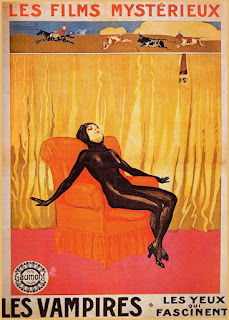
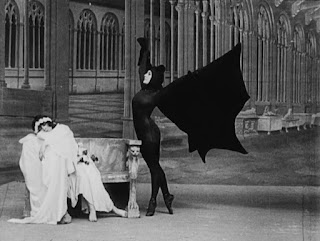
Les Vampires

Image credit: IMDb

It’s most interesting to go back in time and pinpoint where certain trends and fashions began, especially in cinema. With films being churned out faster and faster nowadays thanks to the pandemic and the need for new and original streaming service content, the industry has been put into a somewhat higher gear. But it’s important to remember that even though the world is moving so fast in terms of producing content for us to consume, we can always choose to slow down and go at out own pace: like I did with Louis Feuillade’s fascinating 1915 movie serial, Les Vampires.

This long film, segmented into ten chapters of varying lengths, tells the story of a Parisian crime gang called the Vampires and their eventual takedown by an ambitious journalist (Edouard Mathe) and his comedic sidekick (Marcel Levesque). Kidnapping, murder, and mayhem abound with each chapter telling a different, smaller story that makes up a grand, epic vendetta. 

Les Vampires is an original in so many ways. Definitely not a film you can do in one sitting, its segmented form is perfect for a balanced cinematic experience of intermissions and breathers in which to catch up on what’s just happened. This also gives us time to appreciate just how influential a historical piece it is. It’s the first thriller, the first example of cinematic noir and the surrealist movement, as well as the first moving picture that delivers the exciting detective story (a la Sherlock Holmes) experience. Watching it is a bit like reading Sir Arthur Conan Doyle’s classic tales of the great detective, with the audience being privy to the tricks and traps of the villains while the hero is not. 

As a representation of society and culture, Les Vampires is mightily clever, as it makes a point to show that good and evil is not always clear and distinct. While the Vampires themselves are merciless and manipulative with brutal means of executing their plans, they are not without their own system of law and government and indeed, at many points during the film the heroes plot and scheme in much the same fashion. This bleeding of the boundaries between good and evil is what makes the film so fascinating, more so considering the fact that the villains name themselves after the most celebrated of evil monsters. 

Image credit: IMDb

We then have the superb visual aspect of the film. While the footage itself is grainy and definitely dated, it does not take away from the fact that there are so many exciting visual treats, mostly to do with the more action-y sequences and sinister stealth plots. Considering this was made in 1915, the set designs are incredible with elaborate trap doors, tricks walls, and sliding panels that would put the castle of Otranto to shame! At one point an entire canon comes sliding out of a wall to fire at a nearby cabaret! Then there are some of the greatest chase sequences I’ve ever seen. The Vampires main mode of travel is shimmying up and down drainpipes, scaling walls, and darting from rooftop to rooftop, which makes for very exciting chases when the good guys get on their tail. We’ve got people being thrown from rooftops into moving cars, people spinning down Cirque du Soleil style to make quick getaways, and enough many nooks and hidey-holes to turn Parisian apartments into Swiss cheese. 

Les Vampires is a stretch, admittedly to sit down and commit to, but one that it worth the investment, especially if you’re as interesting in film history as I am.

Director: Louis Feuillade, 1915

Cast: Edouard Mathe, Musidora, Marcel Levesque, Jean Ayme, Fernand Herrmann & Stacia Napierkowska

Saturday, February 17, 2018

Dementia 13

Image credit: Movie Poster Shop
Ever wondered what Psycho would be like if it was a B-horror movie directed by Francis Coppola and produced by Roger Corman? I’m guessing you probably haven’t but for anyone who’s mind has actually wandered that road you’d need look no further…

It begins with a shady villainess’ plan to manipulate her would-be mother-in-law into changing her will. After her husband suffers a heart attack Louise (Luana Anders) is furious that she’ll be left nothing while the Haloran fortune is given to a mysterious charity under the name of ‘Kathleen’. However, her scheme is cut short when she’s killed by an axe-wielding figure. When a local hunter also goes missing it becomes apparent that there is something haunting the Haloran Castle and as more strange incidents start to happen the family’s doctor (Patrick Magee) makes it his mission to solve the riddle and find out what really happened to Kathleen Haloran.

A very Hitchock story without any of the visual sophistication and flair, this schlock thriller is actually quite amusing –until the ending. Watching a movie like this makes you realise just how important the ending is to a horror film. The best movies end on a note of lingering danger: Psycho with the skeletal face of Norman’s mother morphing over his own, Nightmare on Elm Street with Freddy dragging Nancy’s mother through the transom, Silence of the Lambs where Dr. Lector says “I’m having an old friend for dinner”… 
Good horror movies hinge on their endings and obviously bad ones don’t mind so much. The abrupt answer to all the riddles mixed with the single-line explanation of a very loaded question –all this coming after a ‘climax’ that is not so climactic- does have the affect of leaving one in a state of ‘huh', despite being a very gothic structural trope. 

Image credit: IMDb
Aside from that detail, the film actually boasts some solid performances, a fair amount of mystery, and a few cleverly constructed red herrings to minutely throw us off the track. There’s enough gore in it to make you cringe –impressive as this was made in the ‘60s- and the playful banter between the paranormal and the psychological is rather enjoyable.


Starring: William Campbell, Luana Anders, Bart Patton, Mary Mitchel, Patrick Magee, Eithne Dunne, Peter Read, Karl Schanzer, and Ron Perry

Tuesday, January 30, 2018

Three Billboards Outside Ebbing, Missouri

Image credit: Wikipedia
What is a thriller? It’s probably one of cinema’s most fluid genres working as a buffer zone between drama and horror. Over the years various films have weighted the neutral zone so that it leans further on the side of horror: Psycho, Silence of the Lambs etc, but with Martin McDonagh’s latest film the pendulum has been swung back over to the raw and dramatic.

Three Billboards Outside of Ebbing, Missouri tells the story of bereaved mother Mildred Hayes (Frances McDormand) who hires three unused billboards outside of town to draw attention to her daughter’s murder and ask the cops why there has been no progress made in catching her killer several months later. Naturally, her plan sends sparks flying through town, but as everyone sides with the cops it becomes apparent that Mildred must take matters into her own hands.

The wonder of this movie comes from its beginning as a conventional thriller –a killer, a quest to find them, and a town against one woman- and quickly changing into something else entirely. By the end you’re left completely stunned by what you’ve just seen. It’s a narrative game of cat and mouse, however it’s impossible to decide who is the cat and who is the vermin, as McDonagh takes the conventional tropes of the thriller and redirects them in a way that takes the movie completely off the map.

Alongside this exciting story we have these wonderfully gritty characters. A second wonder of this movie is that its characters are themselves recognisable clichés of the genre –making us hate or love them as such- but they also get changed around so that the people you began the film hating end up busting their way into your heart like a bad rom-com. The cast is absolutely wonderful. Frances McDormand is tough on the outside but sweet in the middle, a clever woman with a redneck attitude. David Stratton has said that this is “her best performance since Fargo” and I can wholeheartedly agree. 
Image credit: The Young Folks
Woody Harrelson as Police Chief Willoughby -the named target in Mildred’s billboards- is a genuine authority figure conflicted with what’s morally right and what’s within his professional power. The internal conflict is consistently stamped across his face and a delicious sense of tragedy envelopes him as his own personal story develops. 
And then we have Sam Rockwell who definitely deserves the Best Support Actor Oscar he’s up for. While the central characters of Mildred, Willoughby and Officer Dixon (Rockwell) all go through some transformation his is the most beautiful to watch, beginning the film as a bumbling but aggressive cop and settling into something ironically gorgeous by the film’s end.


Whilst it’s not a movie that you should enter into lightly, Three Billboards Outside Ebbing, Missouri is the film that you should start your Oscars catch-up with.

Starring: Frances McDormand, Woody Harrelson, Sam Rockwell, Caleb Landry Jones, Kerry Condon, Abbie Cornish, Lucas Hedges, Amanda Warren, and Peter Dinklage
Year: 2017

Saturday, November 18, 2017

Murder On the Orient Express


Image credit: Movie Web
This is a movie that proves that some classes of stories will never expire, but just age like cheese or fine wine. Branagh’s adaptation of Agatha Christie’s classic novel is coming 43 years after Sidney Lumet brought it to the big screen and it hasn’t aged a day! What is it about the whodunit that keeps it so perfectly preserved? 
Actually, it's no wonder when you look at the many ways in which you can enjoy the story.

Image credit: Rottom Tomatoes
Level number one –of course- is the classic detective story, which Branagh re-imagines beautifully. For famous detective Hercule Poirot (played by Branagh himself), a lavish train journey turns into a hunt for a murderer when one of the passengers is killed and he discovers that everyone on board has a motive. There are no new-fangled experiments with this modern movie it’s purely a return to basics with all the classic tricks of the genre working to create suspense, confusion, and excitement. We’ve got plot misdirection, red herrings, double identities, and the timeless race against the clock, all shot in a very sophisticated way against this lavish background that makes you want to time travel.

That’s the second layer: the authenticity and its voyeuristic impact. There is a breathtaking amount of detail put into the authenticity of the set, costumes, and makeup design. Despite being helplessly captivated by Branagh’s majestic facial hair, you can spend a large portion of the film marveling at the lavishness of the train itself as well as the gorgeous costumes of the characters. This attention to detail amps up the voyeuristic clout of the story by making it physical, glamorous, and enticing to a contemporary audience.

Image credit: IMDB
The final layer is the turn of events. After all this delicious suspense and events that have our minds racing to find the answers, the ending –don’t worry I’m not going to spoil it- is both shocking and beautiful. Depicted in a way akin to a Shakespearean tragedy, it brings a different genre level into the mix and shows off Branagh’s penchant for serious drama: remember that this guy brought us adaptations of Hamlet (1996), Henry V (1989), and Frankenstein (1994): he obviously knows what he's doing! 


Despite the poster screaming, “camp murder mystery”, this film proves to be more than just another thriller. Branagh’s sophisticated knowledge of the story’s appeal is a wonderful insight into genre and it shows that there are stories out there that will undoubtedly outlive us all!

Starring: Kenneth Branagh, Michelle Pfeiffer, Josh Gad, Penelope Cruz, Willem Dafoe, Daisy Ridley, Judi Dench, Johnny Depp, Leslie Odom Jr., Tom Bateman, Derek Jacobi, Sergei Polunin, Lucy Boynton, and Olivia Colmon
Rating: M
Year: 2017

Sunday, October 1, 2017

A Shriek in the Night


When a film starts with a scream and a man falling a couple of storeys to his death, it promises to be an interesting ride. But sometimes this is not always the case, such as in the case of A Shriek in the Night. 

Beginning with a dramatic death scene, the film chronicles a murder mystery that has police baffled. But two rivalling journalists (Ginger Rogers and Lyle Talbot) aren’t so quick to close the case. When another body is found, a resident of the same apartment building, the two competitors team up to find the murderer and get the scoop. 

Part Hitchcock thriller with cryptic clues, part romantic comedy in the vein of His Girl Friday, A Shriek in the Night sits as a truly vanilla film. There is nothing actually wrong with it, but it could have been strawberry cheesecake or phish food, something much more exciting. The story is all gothic and whodunit with all the answers being spilled out at the last minute. 
The characters of the two journalists are kind of fun, she’s pretty and ambitious but not the most cunning and he’s a smartarse, cynical dickhead who fancies her. I might have been more invested if their story and relationship was developed a little more, but sadly it is all about the murder and that doesn’t really work as a thickening agent for their ‘romance’. 
At best, this movie can be described as a paint-by-numbers thriller: going along in a preordained sequence that will produce something entertaining, but not spontaneous and creative or original at the end. 

While there is nothing wrong with the construction of this movie, it could have done with a little more investment from the writers and director. The story is engaging and opens really well, throwing us right in the deep end, but then there’s not a lot to flesh out the conspiracy of it all throughout the rest of the film and I can’t help but feel that if we were given more characters or information about the other residents of the apartment building (as they’re the ones dropping like flies), it could have been rounded out into a much more intriguing thriller like a Hitchcock classic or Sherlock Holmes narrative. Its one-dimensional path (for the majority of the movie) is fine to travel by, but doesn’t offer any distractions, which is something that a movie like this needs to really deliver an experience. Plus, with a little more investment, the identity of the murderer could have been much more of a twist. 

While the story is fine, the characters are interesting, and the performances are all solid, A Shriek in the Night is a vanilla thriller that suffers from a lack of investment from those whose job it is to make the movie exciting. The straight and narrow path proves not to be the best to take when dealing with whodunit movies. 

Starring Ginger Rogers, Lyle Talbot, Harvey Clark, Purnell Pratt, Lillian Harmer, Arthur Hoyt, Louise beaver, and Clarence Wilson 
Rating: PG 
Year: 1933

Wednesday, August 16, 2017

Atomic Blonde


I don’t think femme fatales are going to go out of style. Blonde and sexy shady ladies have been a hot item ever since 1930s Hitchcock. Over the years they have developed as their genres have developed: thrillers and action movies splintering into different subgroups to create ladies of all kinds of bad-arsery. But the hottest thing right now is the cool and calculating lady spy and assassin. And with that image in mind, we turn our attention to Charlize Theron and Atomic Blonde. 

Set during the Cold War, just before the fall of the Berlin Wall, the film tells the story of MI6 agent Lorraine Broughton (Theron) who is sent to Berlin to recover a missing list of agent identities following the death of a fellow agent. With the questionable help of fellow agent Percival (James McAvoy), Broughton discovers there is more going on than mere recovery of a lost list: there’s a double agent threatening everything. 

For the most part, this is a clever and stylish Cold War spy thriller filmed with taste and a great understanding of the genre. All of the misdirection and subterfuge is done perfectly with red herrings swimming about flawlessly and the twist coming as a delightful and exciting shock. 
However, the last five minutes renders all that brilliance void. It seems that the writers got so hopped up on the twists and turns of the genre and decided to really bash us over the head with the spy-twist mallet. Not only could the film have finished three scenes before it finally did, the twists of the last few minutes completely made half of everything that happened in the movie pointless and highlighted some lazy writing that would otherwise have gone unnoticed. So, at the end of it you’re left feeling completely confused. 

On a more positive note, Theron is a classic femme fatale. She’s cold, calculating, and practically emotionless, only becoming really animated when she’s kicking some serious arse. Half of the amusement is trying to read her face and get clues as to what’s going on from her actions, but she hides everything so well. 
The other major upside to this film is its dirty and punk-rock 1980s aesthetic with grunge, neon, and spray-paint featuring prominently in the set design and location captions. 
And then we have the fantastic soundtrack! Like a Tarantino movie or Guardians of the Galaxy, the soundtrack has a strong working role and is not just there to provide noise. A mixture of 80s synth-pop, grunge, and metal, it accompanies the film perfectly, creating ambience, drama, and sometimes comedy. 

For the most part, Atomic Blonde is a really good movie, and it’s awful that the last few minutes work to undo all that goodness. But sadly, the film is made memorable for the confused and unsatisfied feeling you’re left with at the end. 

Starring: Charlize Theron, James McAvoy, Tony Jones, Eddie Marsan, James Faulkner, Roland Moller, Sofia Boutella, Bill Skarsgard, Til Schweiger, Sam Hargrave, and John Goodman 
Rating: 
MA Year: 2017

Tuesday, June 6, 2017

The Third Man


Genre is a funny thing. One the one hand, it’s a fixed set of rules that writers, producers, and directors follow to make a movie. On the other hand, those rules often change as societal attitudes change. As a result, we are treated to a multitude of classic movies that just keeps on growing. The thriller genre is a particular one of interest for me. It’s a genre that works as a bridge between drama and horror and, as such, its movies are shaped by the building blocks of each. One can easily argue that thrillers these days have become a tad convoluted: made confusing by elaborate stories and plotline rules that become to numerous to retain. But when you go back and watch, say, The Big Sleep (1946), you realise it’s not all that different from modern movies like Inception or Se7en. However, there was a time when simple things such as the setting, the script, and the camera angles had just as much, if not more, power than the complexities of the modern thriller script. Take Carol Reed’s The Third Man for example. 

The film tells the story of a broke American pulp Western writer (Joseph Cotton) who comes to a post-war Vienna with the promise of a job from an old boyhood friend. However, he arrives to discover that his friend Harry Lime has been killed in a car accident. Curiosity causes him to probe into the death and when a few witness accounts don’t add up, he begins to suspect foul play. The further he probes, the more questions come to light about Harry Lime: what was the racket he was involved in, is his lover really that clueless about his friends, and who was the mysterious third man who helped move his body? 

The screenplay is by Graham Greene and it’s a masterstroke from start to finish. Taking the familiar tropes of American noir movies and putting them in a post-war European setting not only provides a haunting and horrific visual setting, but also brings a lot of complexity to the movie. Shot on location in Vienna, which has been quartered into districts between four military powers, the film depicts a real post-war horror show. Buildings are half-standing, there is rubble and fragments of architectural civilisation everywhere, and the entire place is plagued with black market racketeers. It provides a truly sad and haunted backdrop that beautifully contradicts and takes away some of the romanticism of the American noir story it’s telling. 
And then complexity is brought into the game simply by the fact that a large portion of the script is in German. The language barrier works wonders in creating a very large serving of mystery and plot misdirection, but at the same time the events of the film are easy to follow because of the genre rules that it adheres to. It just goes to show that genre is the same in any language. 

On a more visual front, this movie is absolutely stunning. Each camera angle is memorable whether it’s depicting shadows on the wall, dying fingers grasping through a manhole, or a headlight illuminating the face of the villain. Indeed the majority of the film’s power comes from its flawless camera shots that don’t necessarily show a lot, but express a whole heap. Add into the mix the wonderful performances from Cotton, Alida Valli, and of course Welles who’s improvised monologue about the cuckoo clock makes for a very interesting scene, and The Third Man is a picture of cinematic brilliance that manages to do an awful lot when you really consider all that’s going on underneath it. The film has a wonderful grasp on, not only genre but cultural genre and how it means different things in different settings, as well as literary devices that make it rich, bold, and truly classic. 

Starring: Joseph Cotton, Alida Valli, Trevor Howard, Paul Horbiger, Ernst Deutsch, Erich Ponto, Siegfried Breuer, Hedwig Bleibtreu, Bernard Lee, and Wilfrid Hyde-White 
Year: 1949 
Rating: PG

Sunday, February 12, 2017

Split


In the absence of great films, we must do with good, and in the absence of good, we just need to accept the fine. A fine movie is not a bad movie; let us get this perfectly clear. It’s a movie that delivers a genre experience, but just could have done certain things better. M. Night Shyamalan’s newest psychological thriller is one such movie. 

Beginning with a clumsy abduction scene, Split tells the story of three young girls who are kidnapped and held captive for an unknown purpose by Kevin (James McAvoy), a man with multiple personality disorder. As the girls struggle to figure out their fate, they meet three of Kevin’s ‘undesirable’ personalities: an antisocial gentleman with OCD named Dennis, a sinister and uptight lady named Patricia, and a nine-year old boy named Hedwig, all who work to serve a fearsome creature known as The Beast. 

Whatever your thoughts are on the films of M. Night Shyamalan, there are things in this movie to both like and dislike. Whilst multiple personality disorder is a disorder and I don’t really agree with the ways in which it’s depicted here, Shyamalan does touch on some interesting ideas. 
His favourite theme of the power of the human, the brain, and the body is constantly at work here, with multiple personality disorder working as an enabler to carry the idea that “the broken are the evolved”. Regenerative capabilities and biological makeup mutations are a big part of this movie, as though Shyamalan saw Deadpool and Doctor Strange and thought, “yep, that’s it”. You have to suspend your belief, but it’s an interesting idea. 
In the movie we learn that Kevin has 23 different personalities, most of which live in communal harmony with each other all working to protect poor traumatised and weak Kevin. This idea of a community of ‘good’ personalities was a nice idea I thought, it’s just a shame that we don’t really get to meet any of them. 

Although the ideas in this film were solid, where it fell down is in its execution of them. For a thriller, Split is not very thrilling and this can be chalked up to the fact that everything, even the parts set in reality, is isolated. A good thriller of this brand has its clincher in the race against the clock element; be it the cops hot on the trail, or the psychiatrist sensing the danger. There is no race against the clock here, no real sense of urgency, and whilst there is a psychiatrist character and investigation story running parallel to the abduction, it’s still very dislocated from reality and the sense of danger, that we know is there, just isn’t created or felt by other characters. It’s very easy to get bored during scenes outside the basement. 

Unarguably, the best part of this movie is James McAvoy. He carries this film, delivering performances that are chilling, sweet, sassy, sinister, funny, warm, and sometimes horrifying. Whenever McAvoy wasn’t on screen, I just wanted to tune out. Everyone else in this movie is fine I guess, but to be honest there isn’t a lot of diversity of characters: we have three damsels in distress, one of which is weird and antisocial, and then the psychiatrist who focuses more on the good side of her patients rather than the seed of trauma and horribleness from which their distinct personalities blossom. So it’s an eh on the rest of the cast. 
Our central heroine has a clumsy history told through flashbacks that do an ok job of show-don’t-tell, but doesn’t really leave us with much as to how she works as a ‘troubled’ person. There are a lot of questions left floating around her at the end of the movie. And then the ending and the shameless plug is pretty clumsy and laid on thick. 

At the end of the day Split is a fine movie. It does deliver an experience that one more or less expects from a thriller, and there are definitely some good things in it. There are just some clumsy and bad parts in it too. 

Starring: James McAvoy, Anya Taylor-Joy, Betty Buckley, Haley Lu Richardson, Jessica Sula, Izzie Coffey, Sebastian Arcelus, and Brad William Henke 
Rated: M

Sunday, December 18, 2016

The Lady From Shanghai


Black and white noir thrillers of the 1940s may be seen by modern movie buffs as being pretentious or overly heavy on poeticism or genre clichés, but one cannot deny their cinematic appeal. I do not think that a movie like The Lady From Shanghai could be remade today and have the same effect. It would irk me to think of someone trying to take such a classic and bringing into the here and now, though no doubt a good filmmaker could potentially do it. So I am grateful that such a thing has, at least to my knowledge, never happened. 

Based on the pulp fiction novel If I Die Before I Wake by Sherwood King, The Lady From Shanghai follows the adventures of handsome and innocent Irish seaman Michael (Orson Welles) who saves a rich wife (Rita Hayworth) from a mugging (and possible gang rape) and is then hired by her crippled husband to be a crewmember aboard their yacht. The already strange circumstances of his hire becomes stranger still when Michael suddenly becomes embroiled in a murder plot with no obvious villain in sight as it seems no one on board can be trusted. 

Nothing beats a movie that shakes things up, and this gem caused quite a stir in Hollywood upon its release. 
After Gilda (1946), Rita Hayworth was the darling of noir with her trademarked long red hair, but her image took a bit of battering in this movie with Welles’ decision to sheer off her locks and die them champagne blonde. Whilst this does nothing to dampen her irrepressible sex appeal in the movie, it did devalue her as a studio asset and made her quite the villainess. I suppose the fact that she was also his ex-wife worked its way into the scandal as well. Hayworth became just like any other Hitchcock-blonde femme fatale, but of course it works wonderfully for the movie. 

For the most part, the story is told in lengthy voice-over monologues; a genre trope effective in other classics such as Sunset Boulevard (which would hit screens 2 years later), but also arguably an opportunity for Welles to give multiple performances. With an Irish brogue, he puts everything into these monologues, playing the true theatrical storyteller, and whilst sometimes he can come across as slightly pretentious and showy, it still works as a great hook. 

In true thriller fashion, the film is all intrigue until the end when the climax rises from the depths of misdirection. Featuring a thrilling shoot-out in a hall of mirrors, the penultimate scene is nothing short of amazing: a perfect visual metaphor for the film itself as well as a climax that stands the test of time and works its way into the company of other such shocking scenes like Hitchcock’s ‘Shower Scene’ (Psycho, 1960) or Wilder’s “I’m Ready for my Close-Up” (Sunset Boulevard, 1950). 

The Lady From Shanghai definitely falls into the realm of classic noir with its seedy characters, stylish shot composition, rich story, and even richer performances. A testament to the unbeatable power of genre and cinema, this movie is timeless. 

Starring: Orson Welles, Rita Hayworth, Everett Sloane, Glenn Anders, Ted de Corsia, Erskine Sanford, Gus Schilling, Carl Frank, Louis Merrill, Evelyn Ellis, and Harry Shannon. 
Rating: PG.